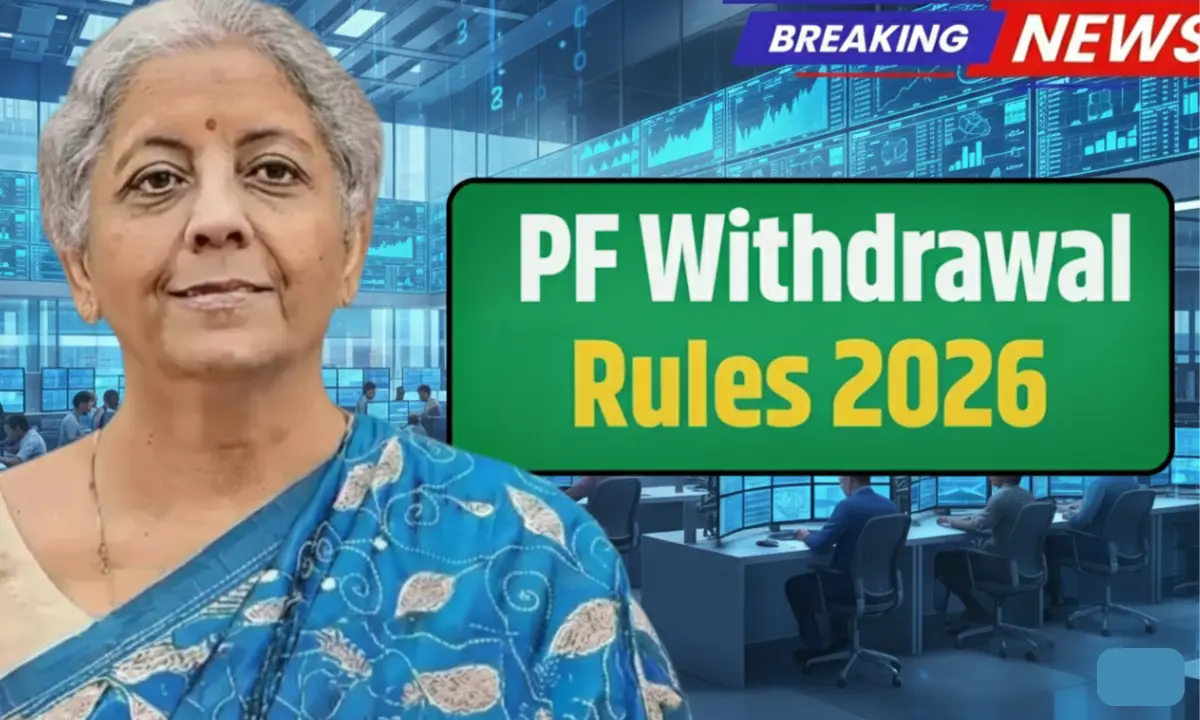
PF Withdrawal Rules 2026 For millions of working professionals in India, the Provident Fund plays a vital role in long-term financial security. It quietly grows month after month, creating a safety cushion for retirement and emergencies. Understanding that employees may need access to their savings during important life moments, the Employees’ Provident Fund Organisation has refined its withdrawal framework for 2026. These updates focus on simplicity, speed, and digital convenience, making it easier for members to use their funds responsibly without compromising future security.
Clearer Withdrawal Structure for Better Understanding
Earlier, PF withdrawal rules were often difficult to navigate because of multiple narrowly defined reasons. The updated structure simplifies this by grouping withdrawal reasons into broader and more practical categories. This change helps members quickly understand whether they are eligible and reduces confusion during the application process.
By focusing on the real financial needs of members rather than technical classifications, the system becomes easier to use. This clarity reduces the chances of errors and rejections, saving both time and effort for employees.
Maintaining Balance Between Today’s Needs and Tomorrow’s Security
One of the key objectives of the PF system is to protect retirement savings. The 2026 rules continue to respect this goal while offering flexibility when needed. Full withdrawal remains available in cases such as retirement or prolonged unemployment, ensuring support during major life transitions.
Partial withdrawals, however, have been refined to allow access while ensuring a minimum balance remains in the account. This safeguard ensures that short-term financial relief does not completely erode long-term retirement security. It encourages responsible use of funds while still providing help during genuine needs.
Digital Transformation and Faster Access to Funds
Digital convenience is at the heart of the PF withdrawal changes for 2026. The EPFO has strengthened its digital infrastructure to reduce paperwork and physical visits. Members can now submit claims online with greater ease, using integrated systems linked to banking and identification platforms.
This digital shift aims to ensure that eligible withdrawals reach members faster, especially during urgent situations. With verified details and proper documentation, claims are expected to be processed within a predictable timeframe. The focus is on efficiency without compromising data security or transparency.
Tax Rules Remain Stable for Long-Term Planning
Tax treatment of PF withdrawals remains consistent, offering stability and clarity for financial planning. Members who complete five continuous years of service can withdraw their PF balance without tax liability. This rule continues to encourage long-term participation in the provident fund system.
By maintaining this structure, the EPFO allows employees to plan their careers and finances with confidence. Understanding the tax impact in advance helps members make informed decisions about whether to withdraw, transfer, or retain their savings.
PF Withdrawal Rules 2026: Key Details at a Glance
| Feature | Earlier Framework | Updated Rules 2026 |
|---|---|---|
| Withdrawal Reasons | Many specific conditions | Broader and simpler categories |
| Full Withdrawal | Limited to defined cases | Allowed on retirement or long unemployment |
| Partial Withdrawal | Complex eligibility | Easier access with minimum balance rule |
| Digital Claims | Basic online options | Expanded digital and banking integration |
| Processing Time | Often uncertain | Faster and time-bound settlements |
| Tax Treatment | Tax-free after 5 years | No change, tax-free after 5 years |
Understanding Common Questions Around PF Withdrawal
The improved digital process allows members to submit claims online with fewer steps. Linked Aadhaar, bank account, and PAN details help ensure smooth processing. The five-year rule for tax-free withdrawal continues to apply, offering reassurance to long-term contributors.
Changing jobs does not usually allow full PF withdrawal. Instead, transferring the balance to a new employer’s PF account is encouraged to preserve savings. Partial withdrawal may be possible if eligibility conditions are met, but a portion of the balance must remain untouched.
Maintaining a minimum balance is a protective measure. It ensures that the primary purpose of PF—retirement security—is not lost while still supporting immediate needs. For faster claim settlement, members should keep their Universal Account Number active and ensure all KYC details are correctly linked and verified.
Final Thoughts: A More Human-Centric PF System
The PF withdrawal updates for 2026 reflect a thoughtful balance between flexibility and protection. By simplifying rules, expanding digital access, and maintaining strong safeguards, the system adapts better to real-life financial situations. Employees are empowered to access their savings when truly needed, without losing sight of their future.
Ultimately, these changes strengthen trust in the Provident Fund system. They reinforce its role not just as a retirement tool, but as a reliable financial partner throughout an employee’s working life.
