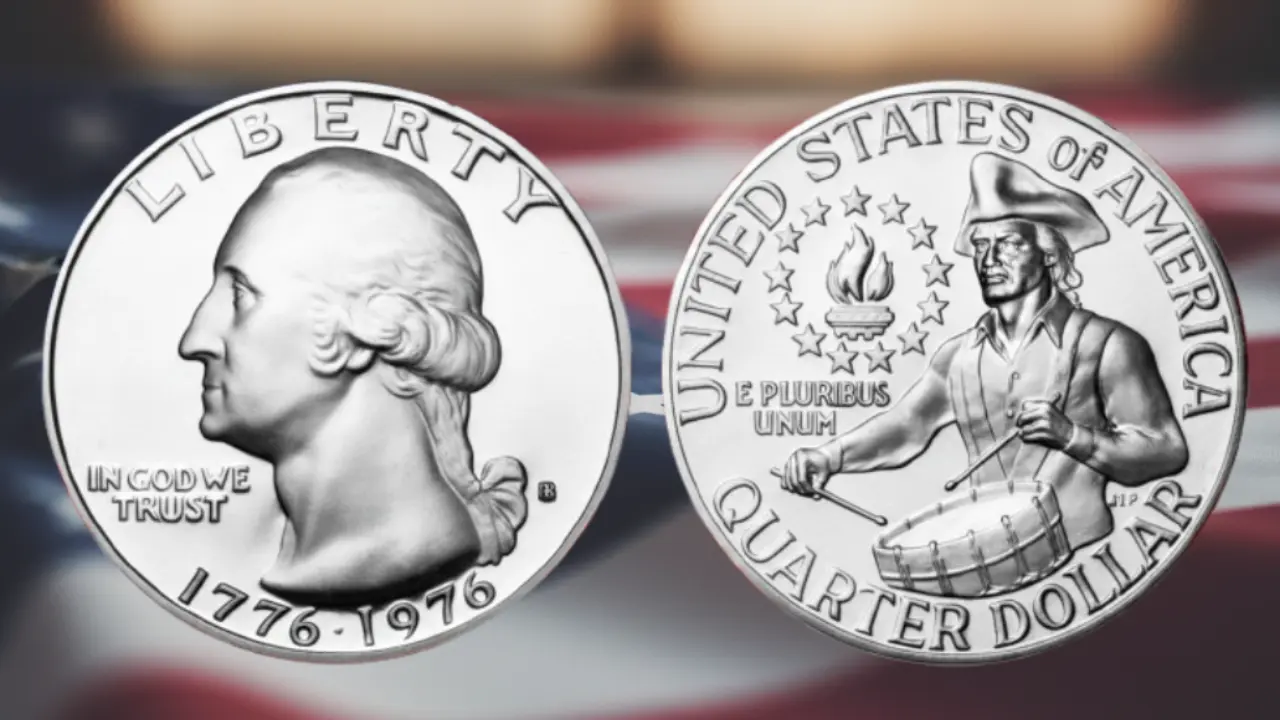
Most people have seen a Bicentennial quarter at least once in their lives. These quarters were issued to mark 200 years of American independence and are easily recognized by the colonial drummer design on the back and the dual date “1776–1976.” Millions of these coins were produced, and most are still worth only their face value. However, one extraordinary Bicentennial quarter broke every expectation when it sold for an astonishing $4.61 million. Its story is not about luck alone, but about history, craftsmanship, rarity, and careful preservation.
How the Bicentennial Quarter Came to Life
During the 1970s, the United States Mint launched a nationwide commemorative program to celebrate the country’s bicentennial. For the quarter, the traditional eagle design was replaced with a colonial drummer holding a torch, surrounded by thirteen stars representing the original colonies. George Washington’s portrait remained on the front, along with the special dual date. These coins were minted in Philadelphia, Denver, and San Francisco and entered daily circulation, becoming one of the most recognized commemorative coins in U.S. history.
Why Some Coins Become Extremely Valuable
A coin’s value depends on more than its age. Rarity plays a major role, especially when a coin is produced with a minting error. Errors can happen when a coin is struck on the wrong metal blank, known as a planchet, or when something unusual occurs during the minting process. Condition is equally important. Coins that remain untouched, with sharp details and original shine, are far rarer than those that have circulated. When rarity, condition, and collector demand come together, a coin’s value can rise dramatically.
The $4.61 Million Bicentennial Quarter Explained
The record-breaking Bicentennial quarter was not a standard coin pulled from pocket change. Experts determined that it was likely struck on the wrong planchet, possibly one intended for another denomination or made from a special alloy. This rare minting mistake alone made it exceptional. What truly set it apart was its near-perfect condition. After professional grading and authentication, the coin received one of the highest possible grades, confirming its flawless surfaces and sharp details. This unique combination pushed it into the category of museum-level collectibles.
An Unexpected Discovery in a Private Collection
What makes this story even more fascinating is how the coin was discovered. It was not found in a bank vault or government archive, but in a private collection where it had been stored for years. The owner had no idea of its true importance. Only when experts examined the collection did they notice the unusual characteristics and exceptional preservation of this particular quarter. Its authentication caused excitement throughout the numismatic community and reminded collectors that rare treasures can still be hiding in plain sight.
More Than Money: A Symbol of National Memory
Beyond its price, this quarter represents a physical connection to a major moment in American history. It reflects the spirit of celebration and reflection that defined the bicentennial era. Because the coin survived in pristine condition, it allows people today to see the design exactly as it appeared when it left the Mint. In this way, the coin serves as both a historical artifact and a piece of preserved craftsmanship.
Why Grading and Preservation Matter
Professional grading services play a crucial role in the coin market. They evaluate a coin’s condition using a standardized scale, giving buyers confidence in what they are purchasing. For modern coins, achieving a top grade is extremely rare because most are handled and circulated. The $4.61 million Bicentennial quarter’s exceptional grade confirmed its elite status and justified the intense interest from high-level collectors.
Auctions and the Modern Coin Market
The coin reached its record price during a major auction, where collectors and investors from around the world competed to own it. Today, rare coins are often seen as alternative investments because of their historical importance and limited supply. The strong bidding showed how much value people place on authenticity, rarity, and storytelling within the coin market.
Could You Find a Rare Coin Too?
Finding a multi-million-dollar quarter is unlikely, but searching through old coins can still be rewarding. Some Bicentennial quarters were made with 40% silver and are worth more than face value. Others may have minor errors that increase their appeal. Even when no fortune is found, the process helps people learn about history and develop an appreciation for everyday objects.
Complete Information Table
| Feature | Details |
|---|---|
| Coin Name | Washington Bicentennial Quarter |
| Mint Years | 1975–1976 (dated 1776–1976) |
| Face Value | $0.25 |
| Standard Material | Copper-nickel clad |
| Special Versions | 40% silver collector editions |
| Record Specimen | Rare mint error coin |
| Highest Sale Price | $4.61 million |
| Key Value Factors | Minting error, rarity, perfect condition |
| Discovery Location | Private collection |
Final Thoughts
This legendary Bicentennial quarter proves that even common objects can hold extraordinary stories. Its journey highlights the importance of careful preservation, professional verification, and curiosity. While most Bicentennial quarters remain ordinary, one became a symbol of how history, rarity, and human discovery can come together in remarkable ways.
