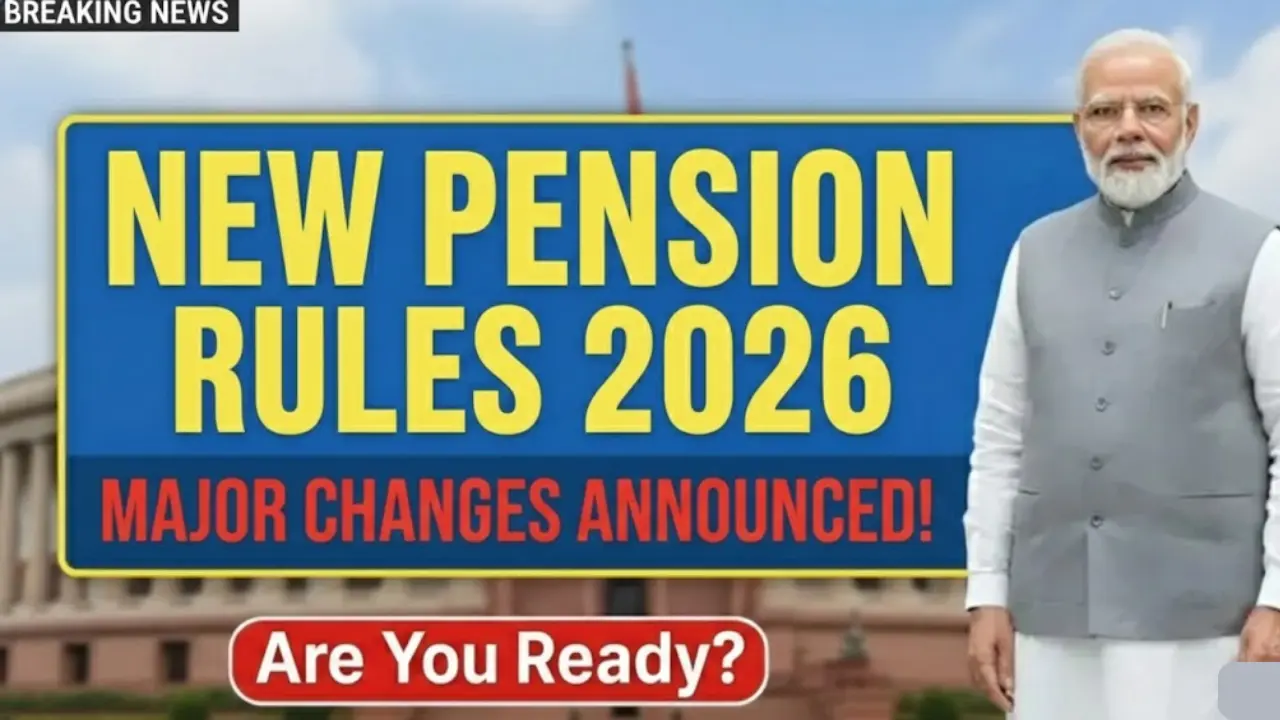
Old Pension Scheme in 2026 The discussion around the Old Pension Scheme has once again come into focus as 2026 approaches. For many government employees across India, this is not just a policy topic but a deeply personal issue tied to their sense of security after retirement. The possibility of revisiting pension structures has sparked conversations about fairness, dignity, and the responsibility of the state toward those who have dedicated decades of service to the public.
Why Pensions Matter Beyond Money
For retired government employees, a pension is more than a monthly payment. It represents independence, stability, and peace of mind in later years. It helps manage rising living costs, medical expenses, and inflation without relying on others. Many employees view a guaranteed pension as a continuation of the respect earned through years of service. As financial markets fluctuate and living costs rise, the desire for a predictable income becomes stronger. This emotional connection is a key reason why discussions around the Old Pension Scheme continue to resonate with employees and their families.
Pension Structure Comparison at a Glance
| Aspect | Old Pension Scheme (OPS) | National Pension System (NPS) |
|---|---|---|
| Pension Type | Defined benefit | Defined contribution |
| Income Certainty | Fixed and guaranteed | Market-dependent |
| Funding Responsibility | Government-funded | Employee + Government |
| Market Risk | None for employee | Borne by employee |
| Inflation Protection | Adjusted through pay revisions | No built-in protection |
| Lump-Sum Option | Not applicable | Up to 60% withdrawal |
| Portability | Limited | Fully portable |
| Tax Treatment | Pension taxable | Partial tax-free withdrawal |
Understanding the Difference Between Old Pension Scheme and NPS
The Old Pension Scheme was built on a defined benefit model. Under this structure, employees were assured a fixed pension amount based on their last drawn salary and years of service. The responsibility of funding this pension rested entirely with the government, and retirees did not face market-related risks.In contrast, the National Pension System follows a defined contribution approach. Both the employee and the government contribute to a retirement corpus, which is invested in market-linked instruments. The final pension depends on how this corpus grows and the annuity purchased at retirement, making outcomes less predictable.
Why the Idea of a Guaranteed Pension Appeals to Employees
The strongest argument in favor of the Old Pension Scheme is emotional and psychological security. Knowing that a stable income will arrive every month for life allows retirees to plan their future confidently. Unlike market-linked pensions, a guaranteed pension removes the stress of tracking returns or worrying about economic downturns.
For many employees, this assurance feels like recognition of their lifelong contribution. It reinforces trust between the government and its workforce and creates a sense of fairness that extends beyond financial calculations.
Why 2026 Has Become an Important Year
The year 2026 has gained attention due to overlapping factors such as policy review timelines, sustained discussions by employee associations, and visible steps taken by some state governments. Several states have already introduced pension arrangements that resemble the old guaranteed model, adding momentum to the national conversation.
These developments have created cautious optimism among employees, though no official confirmation has been made by the central government. The focus on 2026 reflects hope rather than certainty.
Balancing Employee Welfare and Financial Responsibility
While the Old Pension Scheme offers comfort to retirees, it also brings long-term financial responsibilities for the government. Critics argue that a fully funded pension system can strain public finances and limit spending on essential sectors like healthcare and education.
Supporters believe that with careful planning, phased implementation, and improved fiscal management, it is possible to protect retirees without harming economic stability. The challenge lies in designing a model that respects human needs while remaining financially sustainable.
Trust and the Relationship Between the State and Employees
Beyond numbers, the pension debate touches on trust. Many employees felt uncertain during the transition from OPS to NPS. Revisiting pension security is seen by some as a way to rebuild confidence and reaffirm the government’s commitment to those who serve it.
A clear and transparent policy, whatever the outcome, would help reduce anxiety and restore faith in the retirement system.
How Employees Should Prepare Amid Uncertainty
Until any official decision is announced, employees are advised to focus on practical planning. Staying informed through government notifications, understanding their current retirement benefits, and maintaining additional savings can help manage uncertainty.
Avoiding decisions based on rumors and seeking guidance from qualified financial advisors remains the safest approach in an evolving policy environment.
Conclusion: A Broader Vision of Retirement Dignity
The discussion around the Old Pension Scheme in 2026 reflects a deeper question about how society values its public servants. While economic realities must be considered, the desire for a secure and dignified retirement remains universal.
Whether or not the Old Pension Scheme returns, the conversation itself highlights the importance of building retirement systems that combine stability, fairness, and sustainability. A future where retirees live without financial fear is not just a policy goal, but a shared social responsibility.
