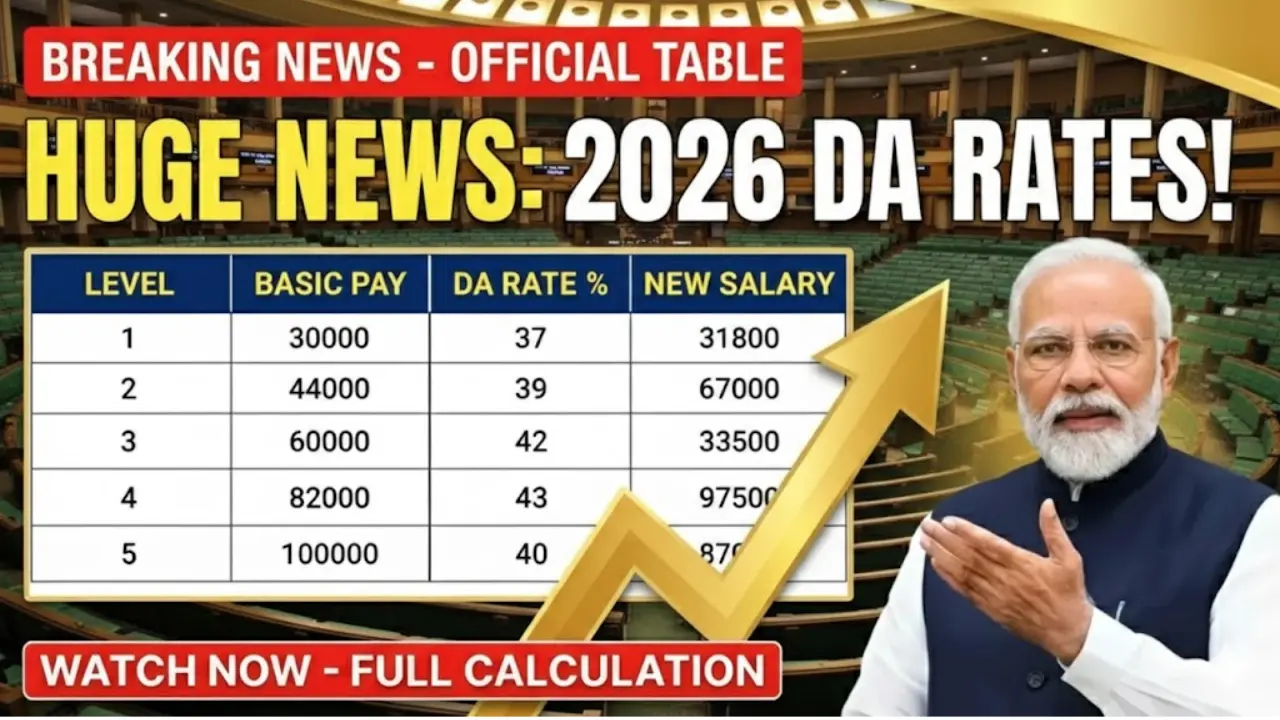
DA Hike 2026 As 2026 begins, millions of central government employees and retired pensioners are closely watching updates related to the Dearness Allowance (DA). This periodic revision is more than a routine policy decision—it directly influences monthly income, purchasing power, and overall household budgeting. With inflation steadily affecting daily expenses such as food, transport, and healthcare, the DA hike acts as a financial cushion. The revision reflects the government’s effort to maintain income stability for those serving or who have served the public sector, ensuring their earnings remain aligned with current economic realities.
DA Hike 2026 – Key Information Table
| Aspect | Details |
|---|---|
| Benefit Name | Dearness Allowance (DA) / Dearness Relief (DR) |
| Beneficiaries | Central Government Employees and Pensioners |
| Revision Cycle | Twice a year – January & July |
| Calculation Base | All-India Consumer Price Index for Industrial Workers (AICPI-IW) |
| Income Effect | Increases monthly salary and pension |
| Arrears | Paid if announcement is delayed |
| Linked Benefits | May influence HRA and retirement calculations |
| Official Authority | Ministry of Finance, Government of India |
| Purpose | Offset inflation and maintain purchasing power |
| Financial Impact | Improves disposable income and savings potential |
Understanding Dearness Allowance in Simple Terms
Dearness Allowance is an additional percentage of basic pay provided to central government employees to neutralize the impact of inflation. For pensioners, this benefit is termed Dearness Relief (DR), though the function remains identical. The adjustment is generally implemented twice each year, effective from January and July, even if the official announcement comes later. By linking DA to inflation data, the system ensures that income does not lose real value over time. In practical terms, it helps employees and retirees manage rising costs without significant lifestyle compromise.
Why the 2026 Revision Holds Special Importance
The 2026 update carries heightened attention because it arrives amid fluctuating economic indicators and shifting consumer prices. A change in DA percentage—even a small one—can significantly influence annual earnings when calculated over twelve months. For working employees, it strengthens disposable income and savings capacity. For pensioners who rely on fixed monthly payouts, it provides critical support against increasing living expenses. The revision is therefore not merely a numerical update but a meaningful reinforcement of financial security.
How the DA Percentage Is Determined
The government does not set the DA rate randomly; it follows a structured and transparent formula tied to the All-India Consumer Price Index for Industrial Workers (AICPI-IW). This index measures changes in the cost of essential goods and services. Authorities calculate an average index value over a specified period and apply it to a predefined formula to determine the percentage increase. Because the method is data-driven, it reflects actual economic conditions rather than assumptions, offering predictability and fairness.
Salary Slips, Pension Credits, and Arrears
Once the revised rate is approved, the effect appears directly in monthly salary statements and pension disbursements. In situations where the announcement is delayed, the difference from the effective date is paid as arrears in a lump sum. This retroactive adjustment often results in a higher one-time credit, which many employees and retirees use to clear expenses or strengthen savings. Additionally, certain allowances linked to basic pay—such as House Rent Allowance—may also see indirect changes, further enhancing total compensation.
Broader Financial Implications
Beyond immediate monthly gains, a DA increase can influence long-term benefits. Retirement calculations, gratuity amounts, and certain allowances often consider DA as a component, meaning the effect extends into future financial planning. Although not all benefits change directly, the overall economic ripple provides a modest yet meaningful improvement in income structure. For families dependent on government earnings, this adjustment can enhance budgeting flexibility and financial confidence.
Staying Updated Through Official Channels
To avoid misinformation, employees and pensioners are encouraged to monitor announcements from official government platforms and recognized financial news portals. Official notifications usually come from the Ministry of Finance or the Department of Expenditure. Keeping track of verified updates ensures accurate planning and prevents confusion caused by unofficial projections or rumors.
Final Outlook
The 2026 Dearness Allowance revision symbolizes a continued commitment to safeguarding the financial well-being of India’s government workforce and retirees. While the exact percentage depends on economic data, the structured approach behind the revision offers reassurance and predictability. Understanding how DA works, when it is applied, and how it affects income allows individuals to make smarter financial decisions and maintain stability despite changing market conditions.
