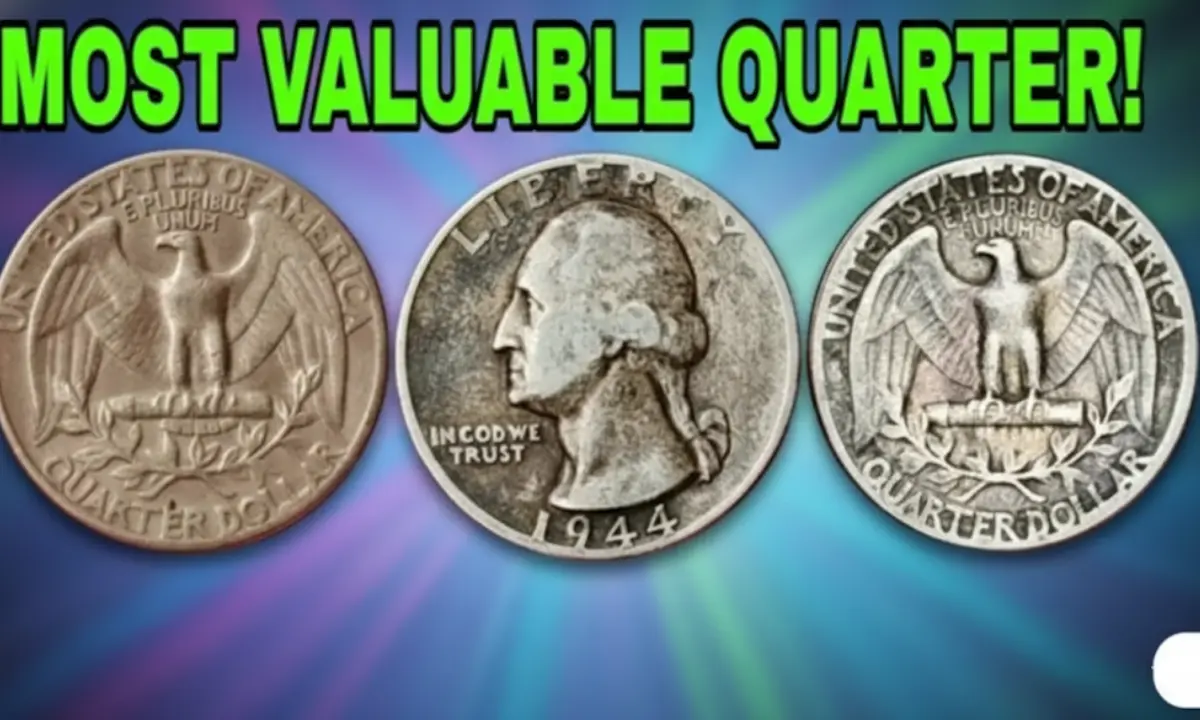
Washington Quarters For almost 100 years, the Washington Quarter has quietly circulated through American life. Most people spend these coins without thinking twice, yet some quarters carry stories far greater than their 25-cent face value. Certain rare examples are worth more than $1,000 and continue to attract serious attention from collectors around the world. Understanding why these coins are valuable opens the door to a hobby that blends history, patience, and discovery.
Why Some Quarters Become Valuable
Not every old quarter is rare, but a few stand out because of specific qualities. Low mintage numbers play a major role, especially in the early years of the Washington Quarter series. When fewer coins were produced, fewer survived, increasing long-term demand. Condition is another critical factor. Coins that remain sharp, clean, and unworn are far scarcer than those heavily used in daily transactions. Minting errors also add value, as mistakes create unique coins that cannot be reproduced. Finally, historical importance matters, particularly for quarters tied to key moments like the first year of issue or the final year of silver composition.
Early Key-Date Quarters Collectors Chase
Among the most sought-after Washington Quarters are those minted in 1932, the first year of the series. The 1932-D quarter, struck in Denver, had a very limited production run. Because many entered circulation during the Great Depression, surviving examples in good condition are difficult to find today. The 1932-S quarter from San Francisco shares the same challenge. Both coins are considered “key dates,” meaning collectors often cannot complete a full set without them, which keeps demand strong.
Error Coins That Stand Out
Some valuable quarters owe their worth to mistakes made at the mint. The 1937 Doubled Die Obverse quarter is a well-known example, showing clear doubling in the date and lettering on the front of the coin. These visual errors are easy to identify and tell a story of the minting process itself. Another example is the 1942-D Repunched Mintmark quarter, where the “D” mintmark was stamped more than once, leaving a visible overlap. Though subtle, this feature makes the coin highly appealing to specialists.
Rare Varieties from the Mid-Century Era
The 1950 Over-Mintmark quarter remains a topic of interest because it appears to show one mintmark stamped over another. While experts still debate exactly how it occurred, the mystery adds to its value. Moving closer to modern times, the 1964 Doubled Die Reverse quarter is especially popular. It combines a noticeable design error on the reverse side with 90% silver content, as 1964 was the final year quarters were made primarily of silver.
A Remarkable Modern Minting Error
One of the most dramatic Washington Quarter errors comes from 1970. The 1970-S proof quarter struck on a foreign planchet is extremely rare. This happened when a blank metal disc intended for a foreign coin mistakenly entered the proof striking process. The result is a quarter with the correct design but incorrect metal composition. Because proof coins are already produced in small numbers, this error stands out as a true numismatic anomaly worth thousands of dollars.
Reference Table: Washington Quarters Worth Over $1,000
| Coin & Year | Mint Location | Notable Feature | Estimated Value Range |
|---|---|---|---|
| 1932-D Washington Quarter | Denver | Low-mintage first year issue | $1,000 – $5,000+ |
| 1932-S Washington Quarter | San Francisco | Scarce early production | $1,200 – $6,000+ |
| 1937 Doubled Die Obverse | Philadelphia | Doubling on date and lettering | $1,000 – $3,500 |
| 1942-D Repunched Mintmark | Denver | Overlapping mintmark | $1,000 – $2,500 |
| 1950 Over-Mintmark | Various | One mintmark over another | $1,200 – $4,000 |
| 1964 Doubled Die Reverse | Denver | Silver coin with reverse error | $1,000 – $3,000 |
| 1970-S Proof on Foreign Planchet | San Francisco | Struck on incorrect metal | $5,000+ |
How to Start Looking for Rare Quarters
Beginning a coin search does not require expensive tools. Checking your pocket change and older coin jars is a simple first step. Pay close attention to dates and mintmarks, which appear on the reverse of older Washington Quarters. A basic magnifying glass helps spot doubling or unusual details. Many collectors also search bank-wrapped coin rolls, turning the hunt into a routine habit. The process teaches patience and sharpens attention to detail.
Protecting and Evaluating Your Find
If you believe you have found a valuable quarter, never clean it. Cleaning almost always reduces collector value by damaging the coin’s original surface. Handle coins by their edges and store them in protective holders. For serious finds, consulting a reputable coin dealer or submitting the coin to professional grading services such as PCGS or NGC can provide authentication and an official condition grade.
The Lasting Appeal of Washington Quarters
Washington Quarters represent more than spare change. They are small pieces of American history that reflect changing times, technology, and artistry. Rare examples remind collectors that even ordinary objects can become extraordinary under the right circumstances. Whether collected for history, curiosity, or long-term value, these quarters prove that hidden treasures still exist for those willing to look closely.
